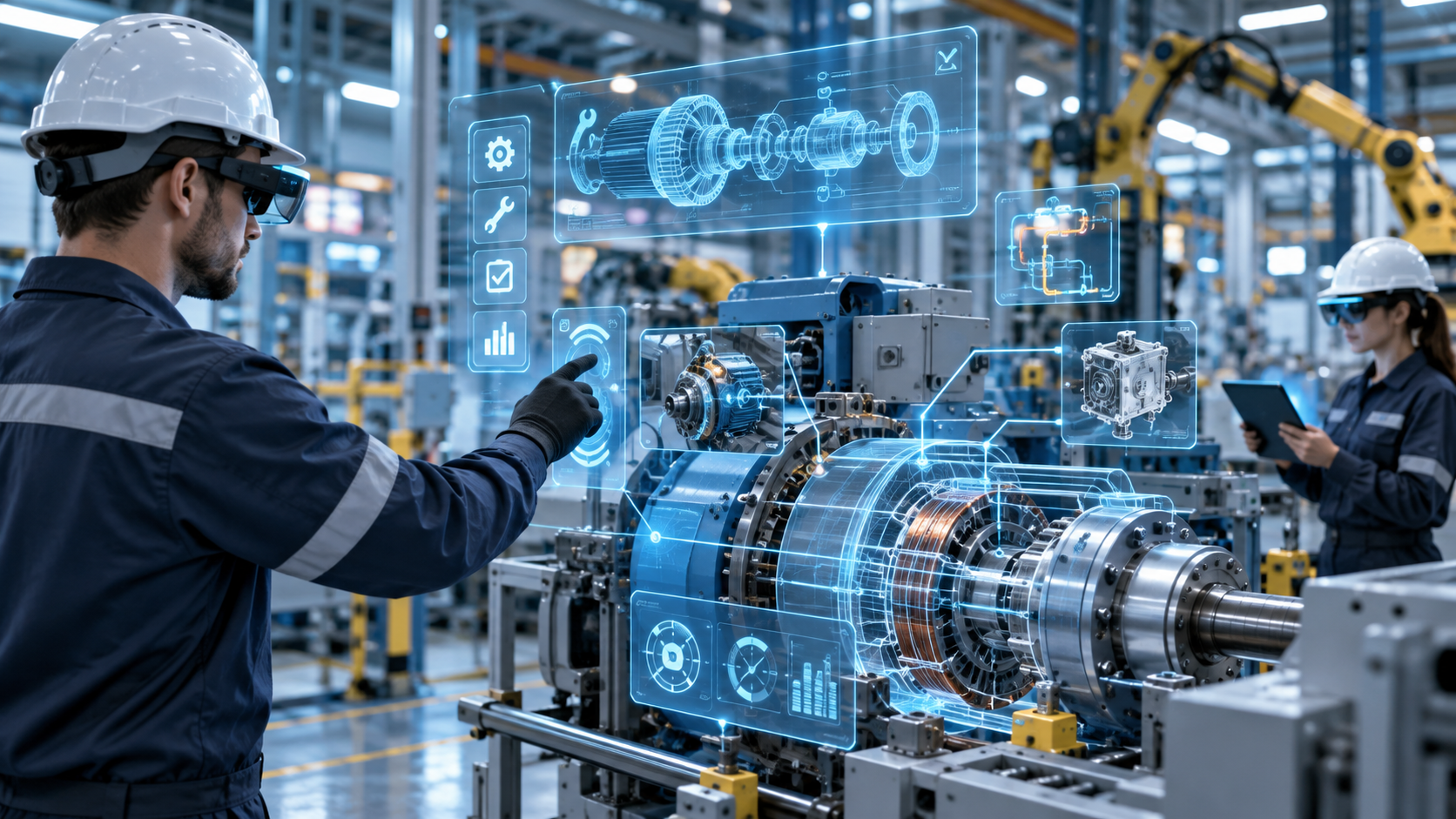
Augmented reality is increasingly being adopted in industrial companies for training, maintenance, production and technical support. AR Services in Industry enable digital instructions, 3D models, equipment data and visual guidance to be brought into the worker’s real environment. Rather than having to switch between different pieces of machinery and separate documents, employees can access relevant information on a smartphone, tablet or AR headset.
AR can make information in the industry more accessible during work, from employee training to remote expert support, assembly guidance to inspections.
What Are AR Services in Industry?
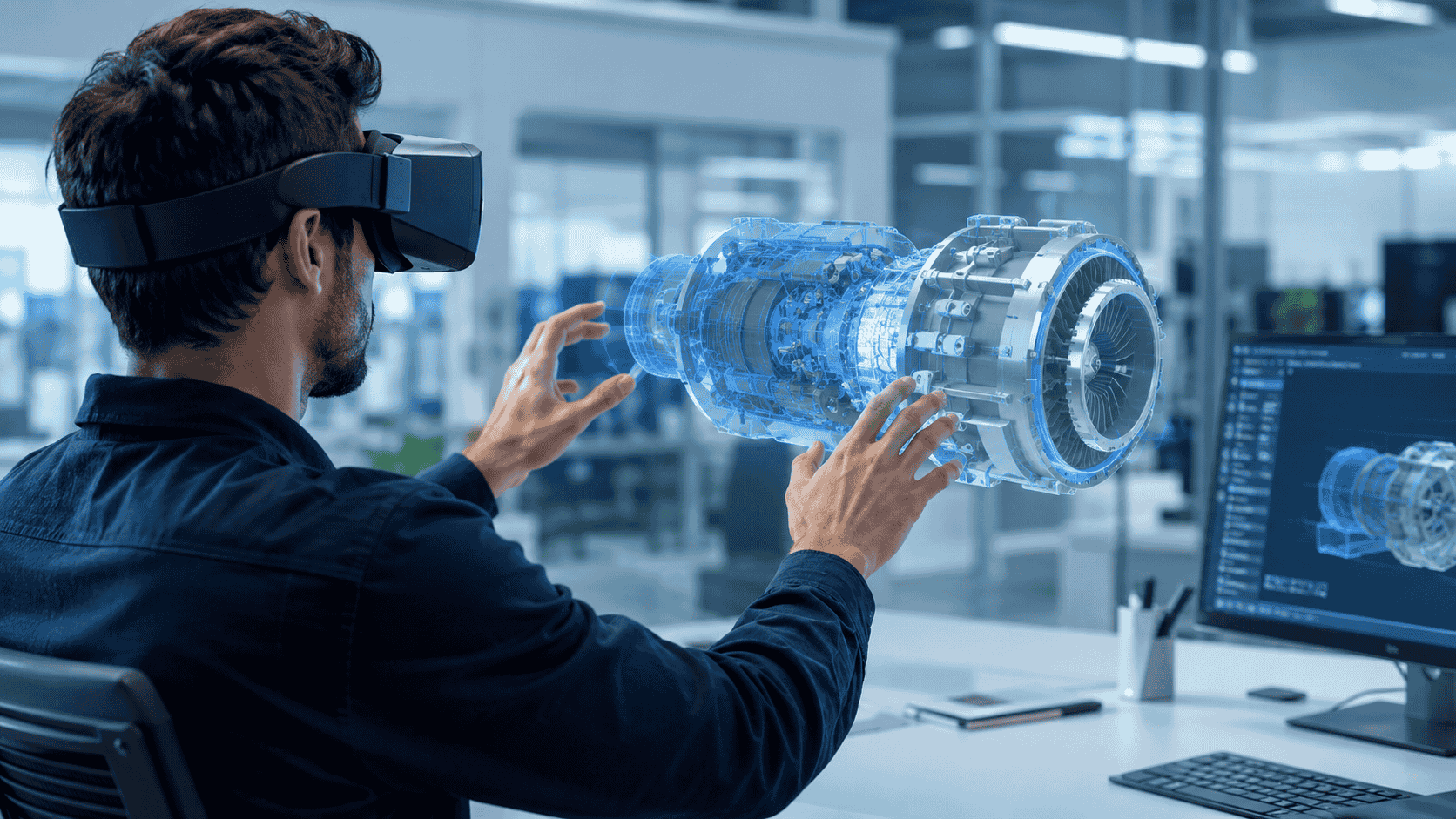
AR Services in Industry are digital solutions that are overlaid on real equipment, machinery or workspaces. The user is still able to view the real world, but extra content is displayed on the screen or headset.
This content can include 3D models, instructions, equipment information, videos, component labels and maintenance procedures. A technician can direct a device to a machine and see a part location and the steps required to inspect the part.
Industrial Augmented Reality can embed instructions right into the context of the task being performed, unlike a traditional manual or training program.
How AR in Industry Works
AR in Industry is usually a combination of a camera-equipped device and software that identifies a machine, marker, object or physical location and shows digital content.
Applications can be deployed on smartphones, tablets or AR glasses. Digital information is aligned with the real environment using cameras, sensors, 3D models and AR software. The application can be integrated with equipment databases or enterprise systems in some cases to deliver up-to-date procedures or machine information.
The intent is to make critical information more accessible while the employee is still on the job.
Major Applications of AR Services in Industry
AR for Industrial Training
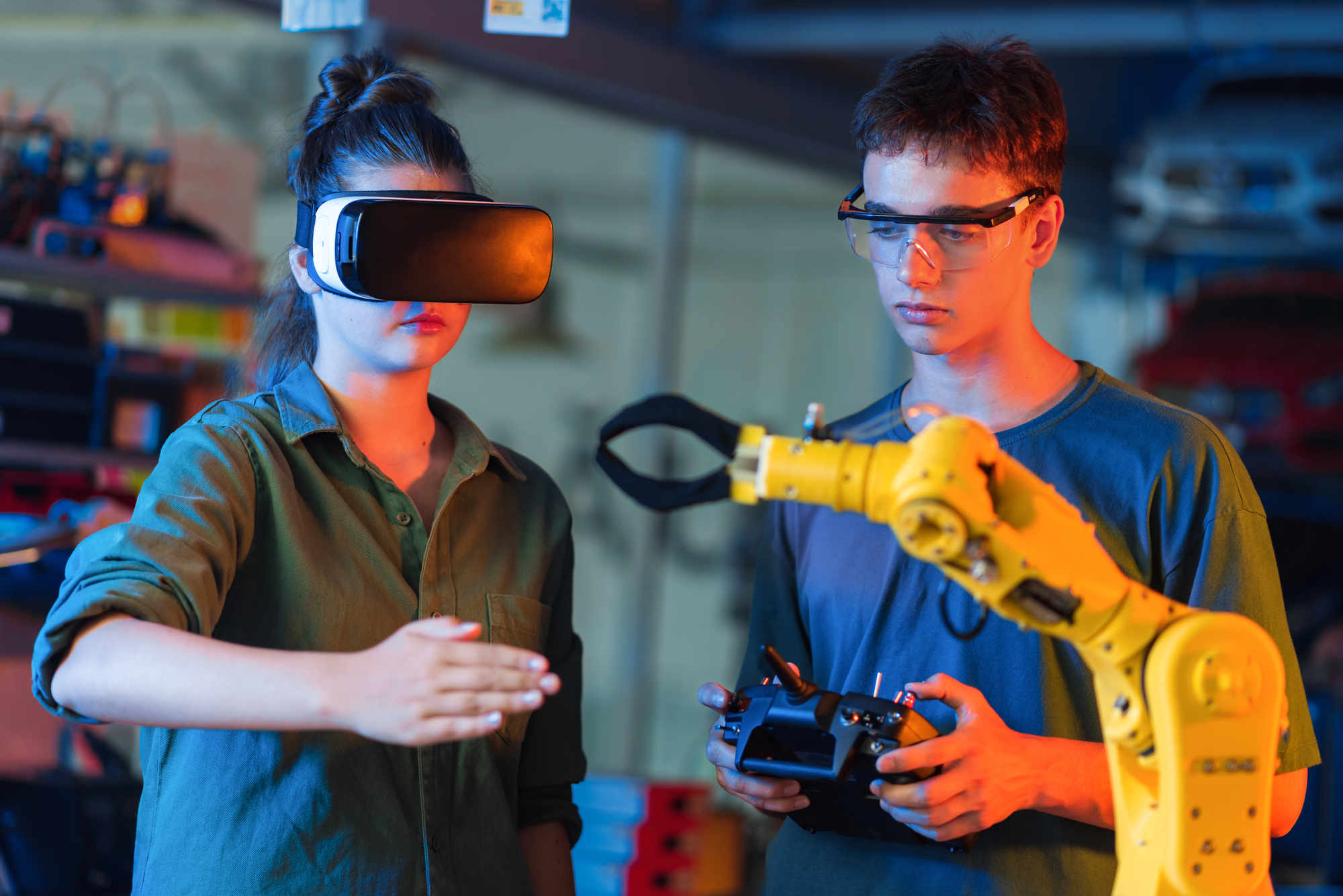
AR training solutions can help employees learn how to operate equipment, safety protocols, and step-by-step tasks. Trainees can watch visual instructions around the machine or work area, rather than just reading from a manual or attending classroom sessions.
This can help to simplify process knowledge and transfer.
AR for Equipment Maintenance
AR for maintenance can provide technicians with information on the location of parts and the procedures to follow during maintenance or troubleshooting.
During inspection of the equipment, a technician might encounter a checklist, part label or maintenance instruction. The degree to which the digital content is accurate in representing the real machine is the value of it.
AR Remote Assistance
AR remote assistance is a feature that allows an on-site technician to communicate with an expert who can be in a different location. The expert can view the worker’s view via a smartphone, tablet or compatible headset and give visual instructions.
They can point to a part, make an annotation or describe the next step. This is helpful if an expert cannot be present at all plants or locations.
AR for Assembly and Production
AR can display digital work instructions during assembly and production. Visual overlays can indicate where a component should be placed, which component to use next or the order in which to proceed.
This can be helpful if there are multiple variants or numerous steps in the assembly.
AR for Quality Inspection
AR-powered inspections can help teams by overlaying checkpoints, specifications, reference models or inspection instructions directly around a product or machine.
This assists inspectors in following a set process without having to constantly toggle between different documentation.
AR for Warehouse and Logistics Operations
AR can be used in warehouses for product identification, picking guidance, and material handling and navigation. Visual instructions can be given to a worker to a storage location, or visual prompts can be given to the worker to indicate the next item in a picking sequence.
This depends on the layout of the warehouse and the flow of the inventory.
AR for Product Visualization
Interactive 3D visualization can be used to show large or complex equipment to the manufacturers before installation. Customers, engineers and sales teams can view a digital model, see components and understand how equipment might fit in a facility.
This facilitates technical discussions, demonstration and planning.
Key Benefits of AR Services in Industry
If AR is tied to a well-defined business process, it can offer a number of practical advantages:
- Improved speed of access to work instructions
- More visual employee training
- Easier knowledge transfer
- Better remote collaboration
- Step-by-step procedures that are more consistent
- Simpler to see complex equipment
- Additional support for maintenance and troubleshooting
The results will vary based on application, content quality, hardware, employee adoption and existing processes.
AR in Industry vs VR in Industry
AR and VR are often grouped together, but they are used differently. AR in Industry adds digital information to the real workplace, while VR in Industry normally places the user inside a fully simulated environment.
| Area | AR in Industry | VR in Industry |
|---|---|---|
| Environment | Real world with digital overlays | Fully simulated environment |
| Main purpose | Real-time guidance | Simulation and immersive learning |
| Hardware | Phones, tablets, AR headsets | VR headsets and controllers |
| Training | Around real equipment | Inside simulated scenarios |
| Maintenance | Useful for on-site guidance | Mainly useful for training |
| Remote assistance | Suitable for live visual support | Less common for field support |
| Simulation | Limited compared with VR | Strong use case |
| Product visualization | Digital products in real spaces | Immersive product exploration |
| Typical use | Maintenance, assembly, inspection | Training, simulation, design review |
A company may use AR for day-to-day work instructions and VR for immersive training or simulation.
Industries Using AR Solutions
AR can be applied to assembly, training, maintenance and inspection in manufacturing companies. Automotive companies can use it for production support, servicing and product visualization.
AR can be utilized by engineering companies to demonstrate equipment and provide installation instructions. It can be used by healthcare and pharmaceutical manufacturers for training, equipment procedures and controlled process guidance.
AR can be applied in the field support of energy, utility, oil and gas companies. It can be used in the aerospace industry for assembly and inspection, or by construction teams to view designs or installation locations.
AR can be applied to picking and navigation in warehousing and logistics, and to explain machinery and demonstrate products and support customers after installation in industrial equipment manufacturing.
What to Consider Before Implementing AR Services in Industry
The AR project should begin with a particular operational problem. The first question businesses need to ask themselves is what the primary requirement is: training, maintenance, inspection, product demonstration or remote support?
The hardware needs to be appropriate for the job. Some applications might be suited to a tablet, others to an AR headset that can be worn hands-free. Other factors to consider are lighting, connectivity, protective equipment and worker movement.
The existing machine data, 3D content and digital systems should be reviewed by companies. Scalability, security and integration needs, and user experience are also important.
One use case can be a good way for a business to test the waters before going all in with AR.
Custom AR Services for Industrial Businesses
Industrial workflows are different for each company, machine and site, and custom AR applications may be needed when generic tools are not a good fit for the actual process.
Custom development can be used to support training modules, maintenance applications, remote assistance platforms, AR work instructions, equipment visualization and interactive product demonstrations and industrial simulations.
XRINK is an AR/VR company and can assist businesses looking at custom industrial applications. The emphasis should be on the task, the information needed and how AR can help to clarify the process.
Future of AR and VR in Industry
AR and VR in Industry are likely to become more closely connected with industrial digital systems. Industrial information can be made more accessible and comprehensible through more practical headsets, digital twins, IoT-connected equipment and 3D visualization.
AR can also be used in conjunction with AI-assisted guidance, and VR can still be used for immersive training and simulation. In operational environments, accuracy, safety and integration are important.
Conclusion
AR Services in Industry can be used for training, maintenance, remote assistance, assembly, inspection and product visualization, by placing useful digital information directly into real working environments.
The best projects start with a real need, not the technology. Before implementation, companies should determine the process, users, hardware, content and integration requirements.
Businesses that are looking into industrial AR solutions can talk to XRINK about their process, equipment and goals to understand where AR or VR can be practically useful.
Frequently Asked Questions
1. What is AR Services in Industry?
AR Services in Industry are AR solutions that can be applied to tasks like training, maintenance, assembly, inspection and remote support. They superimpose digital information on the user's perception of the physical work environment.
John Doe Tweet
2. What are the applications of AR in manufacturing industries?
AR can be utilized by manufacturers for visual work instructions, maintenance, employee training, quality checks, assembly guidance and product visualization. The application should be chosen based on the production process and business goal.
John Doe Tweet
3. What is the difference between AR in Industry and VR in Industry?
AR in Industry overlays digital information over the real world, and VR in Industry immerses the user in a simulated world. AR is typically used for real-time work guidance, and VR is typically used for training and simulation.
John Doe Tweet
4. Can AR be used for industrial maintenance and remote assistance?
Yes. AR can be used to show maintenance instructions around equipment and link technicians with remote experts who can give visual instructions during maintenance or troubleshooting.
John Doe Tweet
5. How can a company start implementing AR solutions?
A company should start with one clearly defined use case and then assess the hardware, content, integrations and user workflow that are needed. A pilot that is focused can help to identify the solution's fit with the actual process.
John Doe Tweet