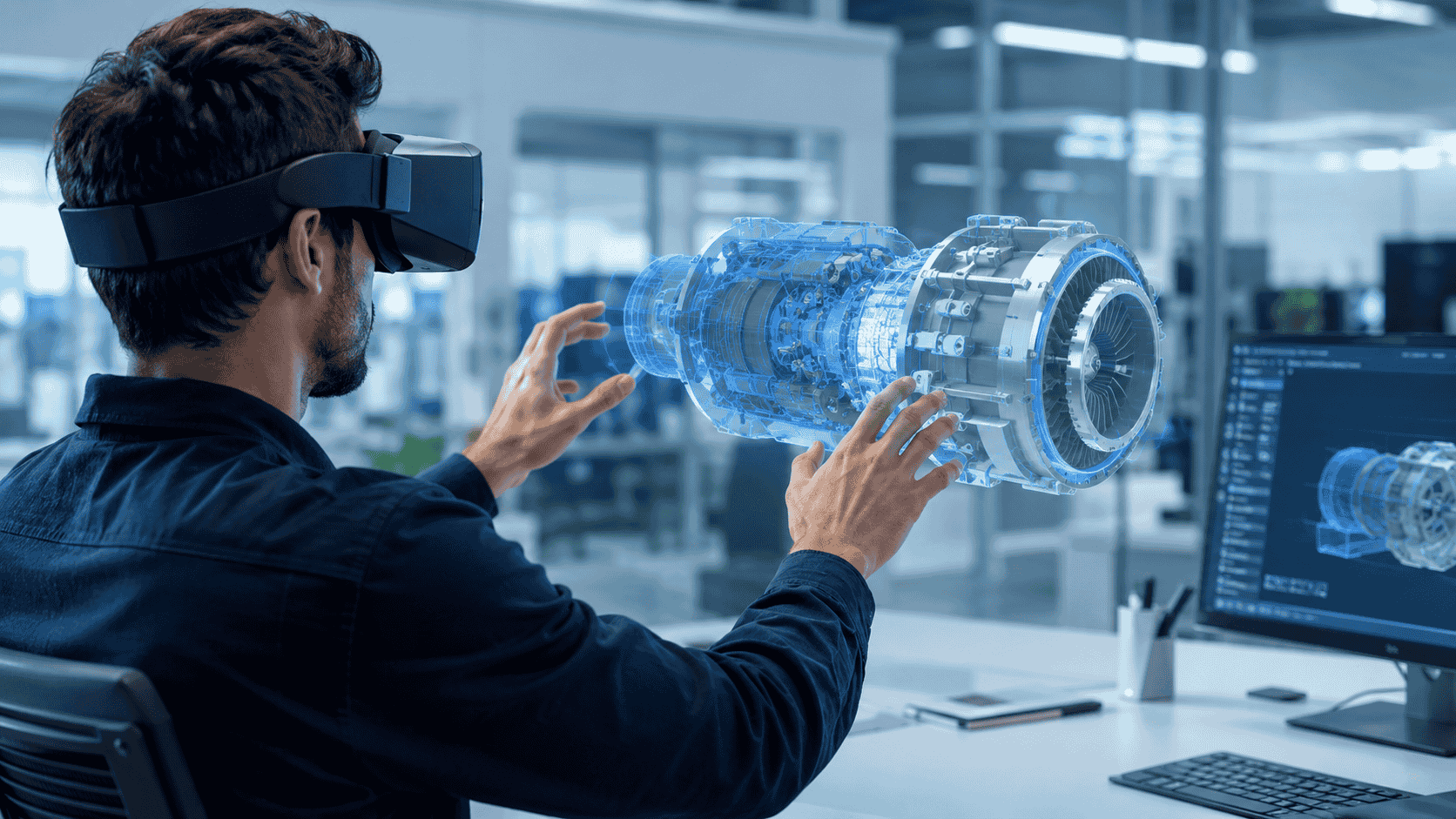
Leading enterprises are adopting immersive technologies to enhance training, visualization, collaboration, customer engagement and efficiency. In 2026, Augmented Reality (AR) and Virtual Reality (VR) are no longer just experimental projects but are real tools for use in many business areas.
VR provides a completely immersive digital environment, with which users can interact with simulated spaces, products and situations, while AR adds digital information, 3D objects and interactive content to the real world. These technologies can help enterprises make complex information more understandable, enhance employee learning and provide more engaging customer experiences.
With the ongoing enterprise digital transformation, AR/VR solutions are increasingly being integrated into the communication, training, design and interaction process of enterprises.
What Are Enterprise AR/VR Solutions?
Enterprise AR/VR solutions are AR/VR applications that are built for business purposes and not for entertainment.
They can be used for employee training, product visualization, equipment simulation, virtual meetings, customer engagement, and remote assistance and interactive presentations.
Modern enterprise AR/VR solutions may integrate technologies such as:
- Artificial Intelligence
- Cloud computing
- 3D visualization
- Motion tracking
- Hand tracking
- Real-time interaction
- Digital twins
- Data analytics
- Interactive virtual environments
These features, when combined, can provide businesses with immersive experiences that are more aligned with actual needs.
Why Enterprises Are Adopting AR/VR in 2026
While traditional training manuals, presentations, videos and two dimensional interfaces are helpful, they are not always sufficient to gain understanding of complex processes when needed by employees. AR and VR offer a more interactive solution.
The AR/VR solutions are being embraced by businesses for objectives like:
- Improving employee training
- Reducing training risks
- Increasing knowledge retention
- Enhancing product visualization
- Supporting remote collaboration
- Improving customer engagement
- Simplifying complex demonstrations
- Creating interactive experiences
Whether the AR/VR is useful or not is dependent on the extent to which it is linked to a practical business issue.
AR/VR for Employee Training and Simulation
Employee training remains one of the most practical applications of enterprise AR and VR.
Traditional industrial training can involve physical machines, experienced trainers, special facilities and production downtime. Many of these scenarios can be simulated in a virtual environment, using VR-based training.
Employees can practice procedures without unnecessary risk to themselves, equipment or operations.
VR training can emulate:
- Machinery operation
- Equipment maintenance
- Safety procedures
- Emergency situations
- Assembly processes
- Technical inspections
- Production environments
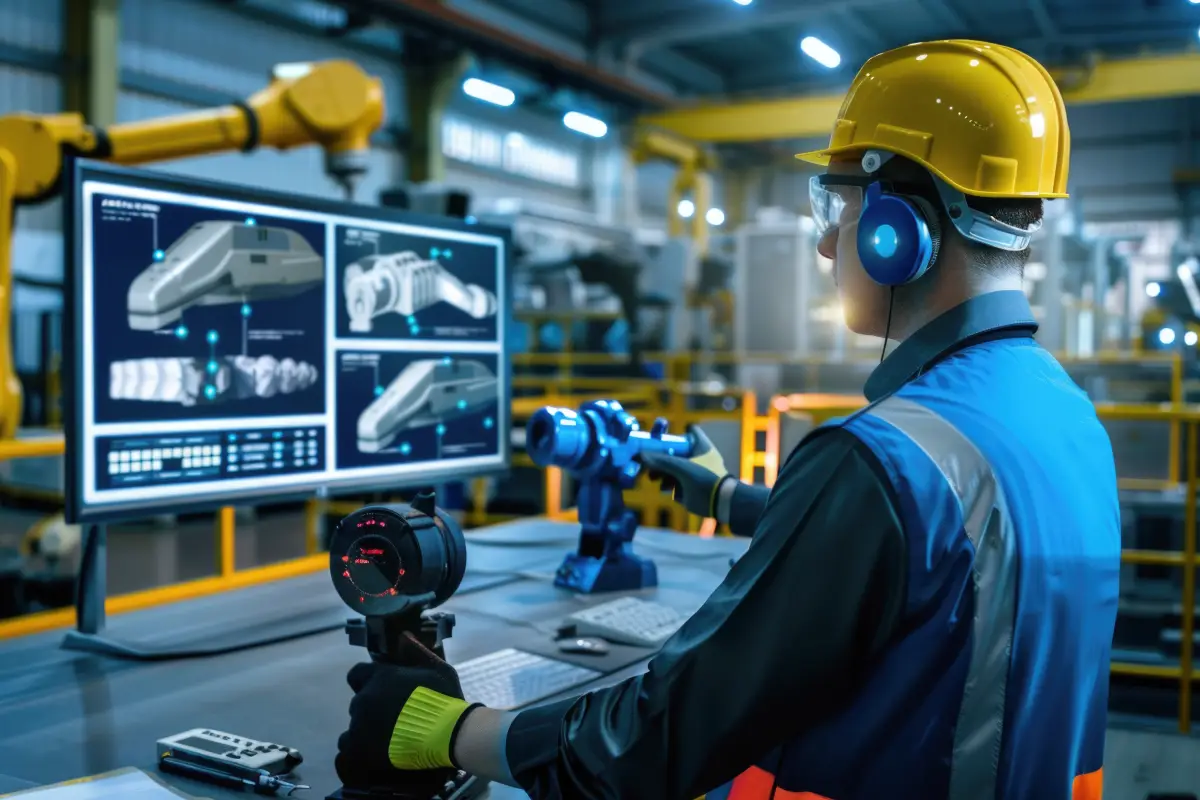
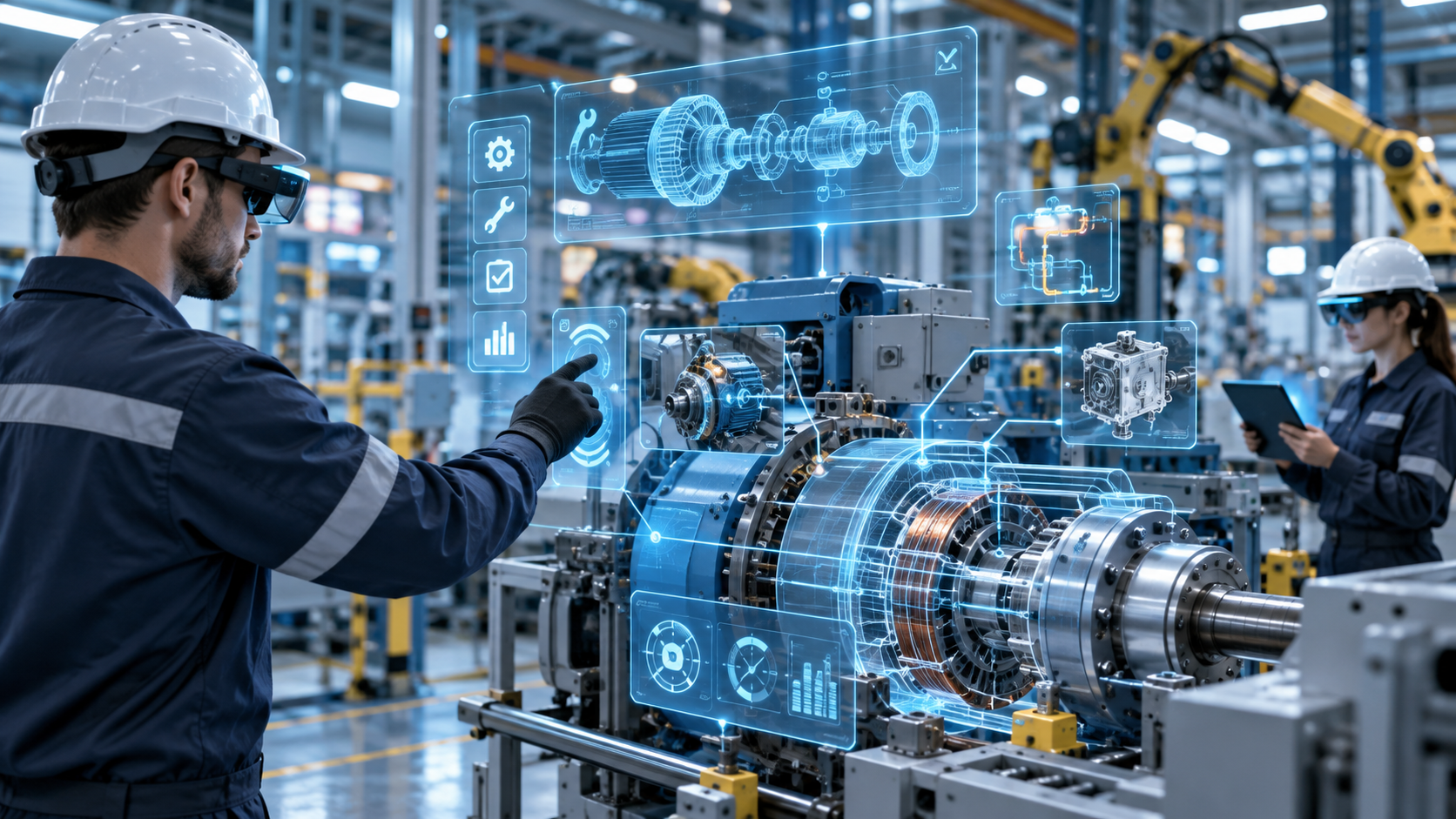
In the manufacturing and engineering sectors, AR VR Services for Industrial can be used to provide immersive training and visualizations of equipment and processes. AR can display digital instructions, diagrams and equipment information during real-world tasks.
Improving Product Design and Visualization
When working on the development of physical products, several prototypes can be created, multiple design reviews and communication among engineering, manufacturing, and management teams can occur.
AR and VR can assist businesses to visualize products prior to production.
Engineers and designers can view digital models at scale and grasp dimensions, assess layouts and discover potential design improvements.
VR gives a complete immersive experience of a product, while AR lets a digital model be placed in the real world. These attributes are especially helpful in automotive, industrial engineering, architecture, manufacturing and product development.
For instance, AR VR Services for Automotive can aid in vehicle visualization, design reviews, interactive demonstrations, and immersive customer experiences.
Supporting Remote Collaboration
Today, enterprise teams are often spread across different offices, factories, cities and countries.
Although video conferencing can facilitate communication, it can be challenging for employees to review and discuss complex equipment, products or environments.
Virtual collaboration can enable several users to enter the same virtual space and interact with shared 3D content.
Teams can use immersive environments to review prototypes, conduct demonstrations, train employees and collaborate on technical projects. AR can also be used for remote assistance.
An experienced technician can provide visual instructions, annotations or step-by-step information to another employee working with the actual equipment.
This can be particularly valuable for businesses operating across multiple plants or service locations.
Enhancing Customer Engagement
Customer expectations are now more digital and interactive.
Customers may not be able to grasp complex products or services with just static images and traditional product descriptions. AR and VR enable companies to create experiences for customers to explore.
Customer engagement can be achieved by enterprise AR/VR solutions via:
- Virtual product demonstrations
- Interactive 3D visualization
- Virtual showrooms
- AR product previews
- Immersive presentations
- Virtual tours
- Interactive brand experiences
These experiences can make the purchasing journey more informative and aid customers in understanding the products before making decisions.
AR/VR Applications Across Major Industries
AR and VR can be customized to meet the needs of businesses in various industries.
Manufacturing and Industrial
AR/VR can support machinery training, safety simulations, maintenance, equipment visualization and process planning.
Healthcare
Immersive technology can support healthcare education, training, simulation and visualization.
Automotive
AR/VR can support vehicle visualization, engineering reviews, employee training and interactive customer experiences.
Real Estate
AR and VR can support virtual property tours and visualization of layouts, furniture and interior concepts.
Retail
AR can help retail businesses enable customers to see products before buying them. VR can also be used to develop virtual stores, product demonstrations and immersive shopping experiences.
Education
Learning can be made more interactive with simulation, virtual environments and 3D visualization in educational institutions. Students will be able to explore ideas other than through textbooks, pictures or presentations.
Travel and Tourism
Immersive technology can be used by travel companies to offer previews of destinations, virtual tours and interactive tourism experiences. Visitors can explore locations before or during a journey, via a digital platform.
Business Benefits of Enterprise AR/VR Solutions
The goal of investing in immersive technology is typically to achieve a clear business objective.
Better Training Experiences
Interactive simulations give workers a chance to learn from their experience and not just from theory.
Reduced Training Risks
Complex and/or hazardous scenarios can be simulated virtually, so that staff can rehearse them prior to experiencing them in the real world.
Improved Visualization
3D models allow users to better comprehend products, layouts, equipment and technical concepts.
Stronger Customer Engagement
Immersive experiences can make product demonstrations and brand interactions more engaging.
Improved Collaboration
Digital models and digital environments can be interacted with by teams, even if employees are located in different places.
Faster Decision-Making
Decision-makers can get more information from virtual prototypes before making production or investment decisions. However, the value depends on how well it is implemented and whether it meets real operational needs.
Role of AI and Cloud Technology in Modern AR/VR
AR and VR are now more capable with integration to Artificial Intelligence and Cloud technologies. AI can assist in object recognition, intelligent interactions, personalization and automated responses in immersive environments.
Immersive platforms can be integrated with Personalized AI Solutions to create more intelligent and tailored digital experiences for individual users or enterprises, depending on their specific needs. Another advantage of cloud technology is the ability to manage immersive applications and content centrally.
Instead of creating completely separate systems for every location, businesses can potentially distribute and update immersive experiences across multiple teams and devices.
Integrating AR/VR into enterprise applications can be further enhanced by real-time data integration with operational systems, equipment information and business data.
How to Choose the Right AR/VR Solution for Your Enterprise
The first step that businesses should take is to pinpoint a problem to solve with AR or VR, instead of just using the technology because it is new.
The initial question should be: How will the AR/VR solution enhance business outcomes?
Some of the common goals might be:
- Improving employee training
- Visualizing complex products
- Supporting remote collaboration
- Creating virtual demonstrations
- Improving customer engagement
- Developing technical simulations
Organizations should then determine whether AR, VR or both are suitable.
The following are important considerations:
- Device compatibility
- Scalability
- User experience
- 3D content requirements
- Integration capabilities
- Cloud accessibility
- Performance
- Data security
- Customization
- Technical support
A scalable platform can enable the organizations to expand the use of immersive applications based on their evolving needs.
How XRINK Supports Enterprise AR/VR Experiences
XRINK offers AR and VR solutions in India for businesses looking into immersive training, visualization, simulation, interactive experiences and customer engagement. XRINK supports industries such as manufacturing, retail, real estate, healthcare, automotive, education and travel and tourism.
XRINK uses immersive 3D content, real-time interaction, cloud-based capabilities, motion tracking and digital visualization to enable enterprises to explore practical applications of AR and VR.
It’s important to always have a clear business need at the centre of the discussion and not see immersive technology as a standalone trend.
Future of Enterprise AR/VR Beyond 2026
Enterprise AR/VR is likely to become more closely integrated with overall digital transformation initiatives.
Cloud infrastructure, 3D and AI technologies are still evolving, and this will enable businesses to build more realistic and interactive environments.
AR/VR can be combined with digital twins, AI-powered assistants, real-time operational information, and shared virtual environments in the future.
Immersive technologies are likely to be best suited to organizations that see practical use cases for training, visualization, collaboration and customer engagement. AR and VR do not necessarily replace current systems but can complement enterprise technology to give employees and customers a more intuitive way to interact with digital information.
Conclusion
AR/VR solutions are transforming how enterprise businesses approach training, visualization, collaboration and customer engagement. As adoption grows in 2026, organizations should focus on practical applications that address clear business requirements. With XRINK, enterprises can explore scalable AR and VR solutions in India for immersive training, simulation, visualization and interactive experiences.