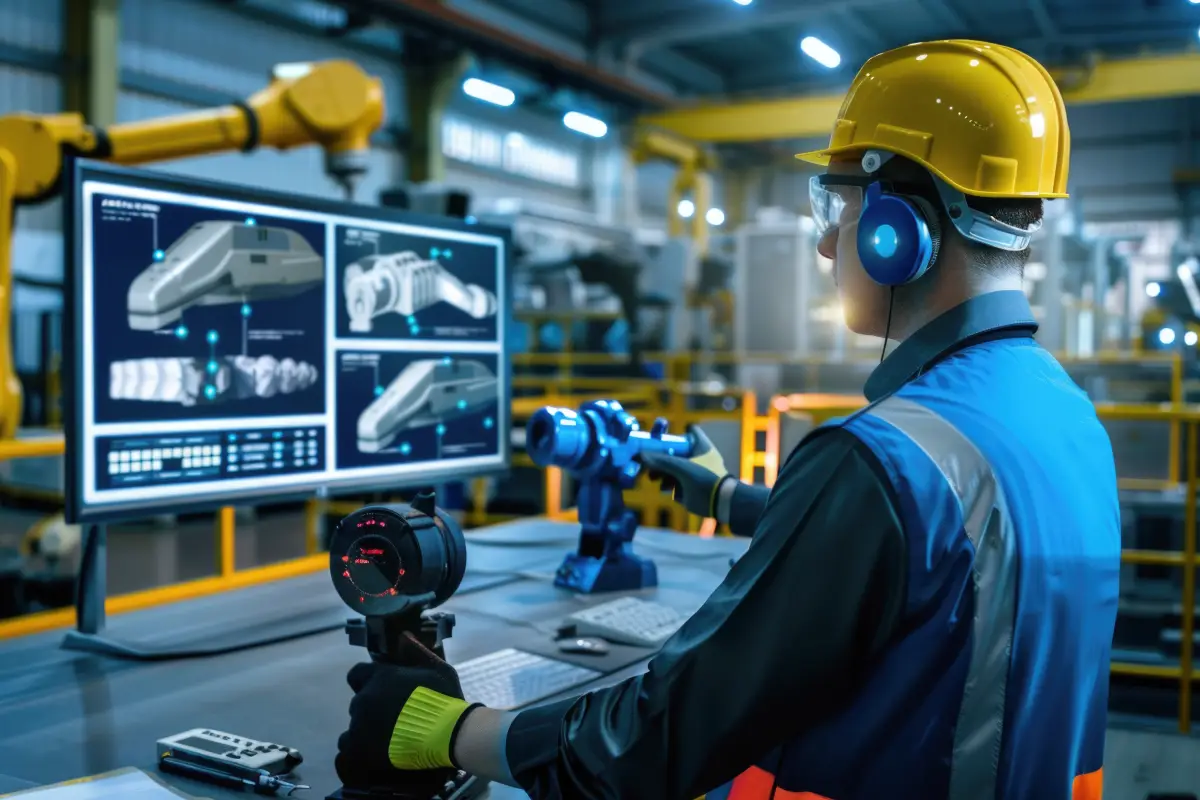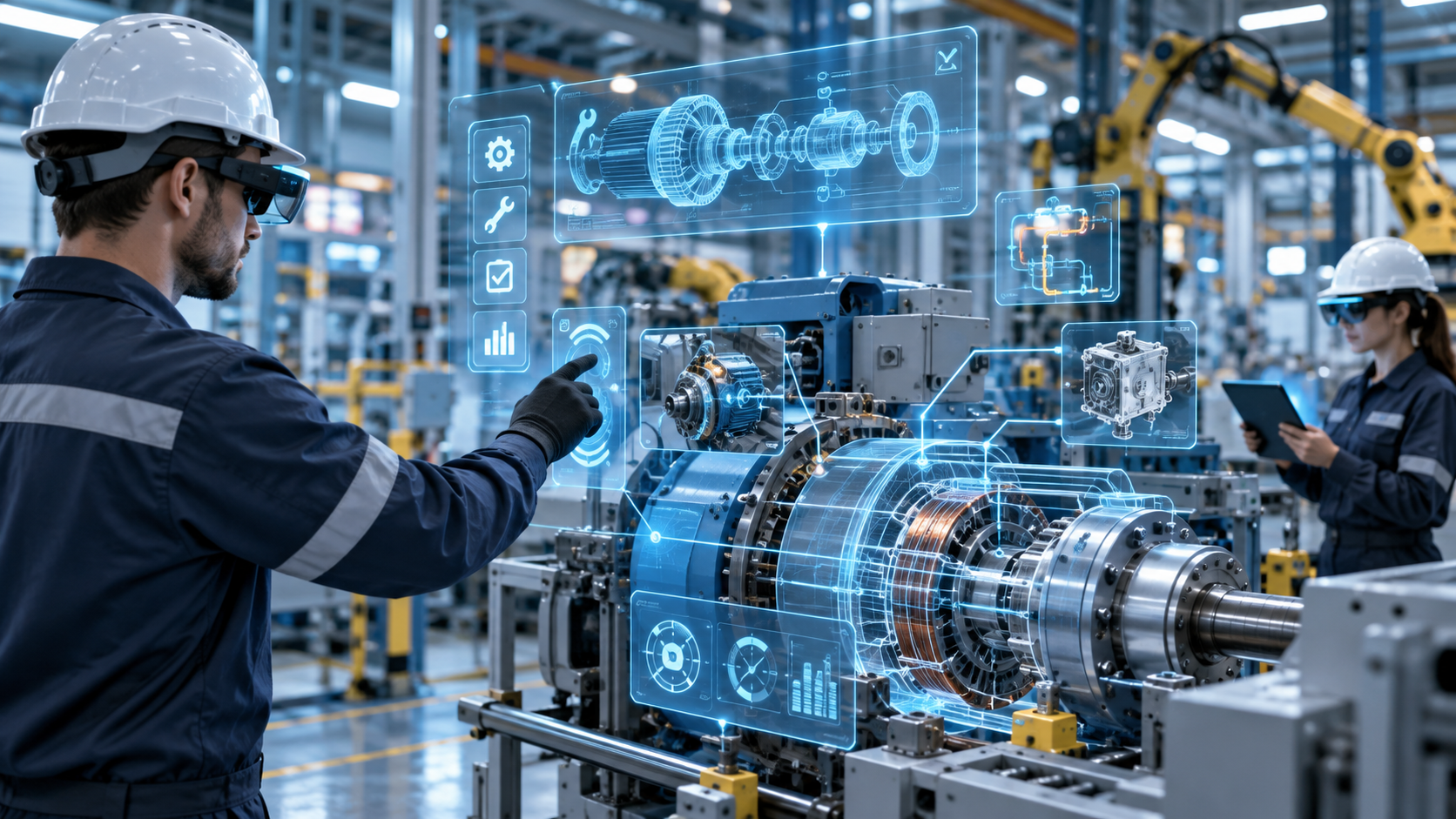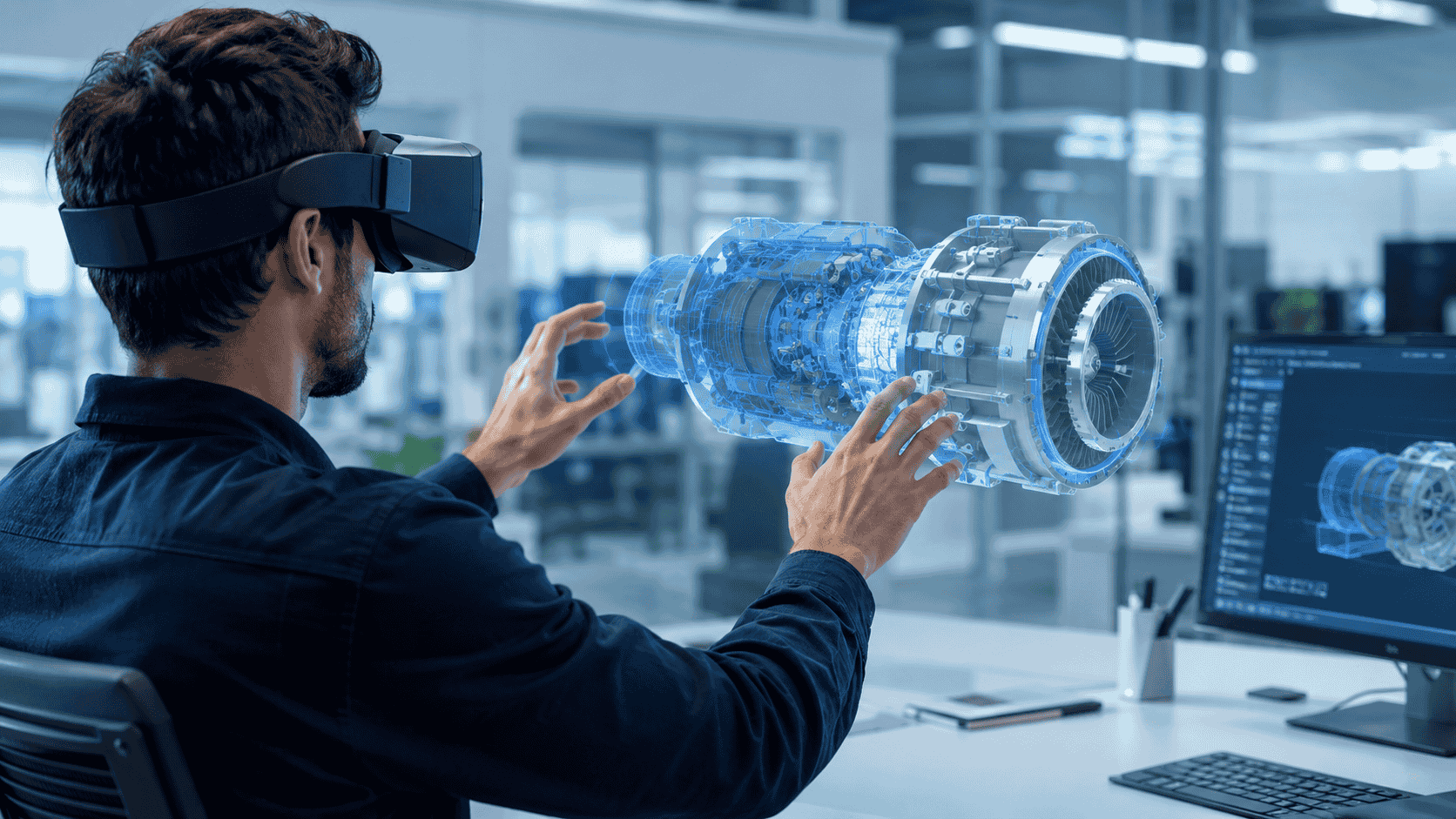

A maintenance manager is faced with the task of training technicians for a machine which he or she has never encountered, while at the same time keeping production equipment running. Businesses should begin by identifying the problem they are trying to address and then evaluate the different VR services available in India accordingly.
The right partner should have the know-how and be reliable in VR development as well as the appropriate hardware, realistic user experience and after-launch support. Question the proposed simulation, inquire about the validation of its content and how your team can measure success.
What Does a VR Solution Provider Do?
A VR Solution Provider is a company that designs, constructs, evaluates, and maintains virtual reality (VR) experiences. An interactive simulation is not like a traditional video or a still 3D model, but rather reacts to the decisions and actions of the user.
Enterprise projects are not just about creating environments that are realistic. They need interaction design, creation of 3D assets, performance testing, user safety and a deployment plan. Enquire about the aspects of this work that Virtual Reality Services in India can do on their own and which are dependent on outside parties.
Why Do Businesses Choose VR Services in India?
Organisations investigate VR when they cannot get hold of an activity in real life, when it's costly to repeat or when it's better explained in three dimensions. Machinery familiarisation, safety scenarios, production layout reviews and technical practice are examples of Industrial VR Applications. VR Training Solutions can familiarize new hires with equipment and procedures prior to supervise work.
A property developer may have a prospective buyer walk through a proposed apartment and engineering teams may review a machine layout together from different locations. A 360 degree guided tour may be sufficient to get oriented.
Key Factors to Consider When Choosing a VR Solution Provider
Industry Experience and Business Understanding
A provider designing a factory safety exercise must understand operating procedures and which decisions trainees need to practise. Ask for relevant workflows, not just attractive visuals.
If the provider is unable to provide any work that is similar, ask him or her to provide a small scenario based on your own needs. Ensure operational personnel review whether the proposed actions are representative of on-site activities.
VR Development Expertise and Technology Capabilities
Detailed 3D models aren't all you need when it comes to Quality VR Development Services. Inquire about team's approach to interactive objects, movement, collision behaviour, feedback and software performance. A machinery exercise may involve trainees performing the actions in a specific sequence; a layout exercise may involve the use of scale and viewpoints.
Verify if models are maintainable as products/ facilities evolve. The provider should make the difference between visual realism and functional accuracy clear, as an impressive animation doesn't necessarily mean that a process has been simulated correctly.
Customisation and Project Requirements
Custom VR Solutions are useful when the task requires specific equipment, specific instructions, specific rules for assessments and/or custom interactions. For instance, a maintenance simulation would require the real sequence of isolating a machine before maintenance.
Define must-have functions early, including which actions are interactive and which are explanatory. Ask who owns the 3D assets and whether content updates will require a new development contract.
VR Hardware and Software Compatibility
Whether to use a headset depends on the project itself, since it influences it right from the start. Standalone devices can make rollout easier, and there are some applications that require a connected computer for high graphics or specific interactions. Before choosing any hardware, be sure to compare the needs for computing resources, tracking space, controllers, battery management, and device availability.
Not all applications will work on all headsets. Request a demonstration of the actual construction in the specified devices and how it will be handled when devices are replaced, software changes or multiple location deployments.
User Experience and Immersive Interaction
A good VR application should provide the user with unambiguous instructions, have accessible information and provide natural object selection or navigation modes. Lack of movement, poor controls and long sessions can distract from the business task, or can be uncomfortable.
Test with first time users, not developers. Look at alternatives such as sitting, access, cleanliness and supervision if required. A virtual exercise should be used in conjunction with suitable practical checks for workplace training.
Testing, Deployment and Technical Support
Before launch, agree to check technical accuracy, usability, performance and headset compatibility. A pilot must involve realistically representative employees, conditions and a clear criterion for successful completion or revision of the experience.
Ensure that following delivery: device setup, administrator training, bug fixes, content changes and support requests. VR Services for Businesses should incorporate a realistic plan for ownership so that when personnel, equipment or processes change, the application can still be used.
How to Evaluate VR Development Services for Your Business
Begin with a brief that is used to describe the business problem, intended users, and the operating environment and outcome of the problem. Get the shortlisted VR Solution Providers in India to respond to the same requirements.
Request a working demonstration of the most important interaction. If you need a training simulation, ask to see how a trainee selects an action, receives feedback and completes an assessment. Check which functions are already developed and which remain proposals.
Involve IT staff, operational experts and end users in the review process. Ensure that there are agreed acceptance tests, handover materials and agreed information that the business must provide.
Custom VR Solutions vs Ready-Made VR Platforms
When the tools of a ready-made platform fit your needs, it may be a good fit for standard virtual tours or learning activities. May not need as much initial development but can be less flexible, limited content ownership and integrations.
Custom development may provide more control on environments and behaviour; however, it may require longer preparation and maintenance. Look at Enterprise VR Solutions in terms of total ownership cost: Licenses, equipment, content updates and internal administration.
Common Mistakes to Avoid When Choosing a VR Provider
One mistake is choosing the cheapest proposal without checking whether modelling, headsets, training and future revisions are included.
Avoid vague commitments about supported devices or unrealistic delivery dates. Do not authorise operating procedures by software developers in safety related scenarios without internal qualified reviewers. Understand the ownership of the model, security needs and support obligations prior to signing.
Understanding the Cost and ROI of VR Services
The cost of VR Services in India depends on the number of environments, the level of interaction, 3D modelling efforts, devices, integration, testing and maintenance. Ask suppliers to separate one-time costs from recurring licences and support.
Use a baseline prior to the pilot to assess returns. The training teams may track time to competency, completion accuracy, and/or training hours or repetitions. Only convert changes to savings if the financial value of the change has been calculated from organisation records.
The purpose of Virtual Reality Solutions for Businesses is not to promise automatic productivity gains; it is to address a measurable operational need.
How XRINK Supports Business VR Requirements
XRINK is cloud-based immersive technology platform and VR-related applications for industrial operations, employee orientation and virtual walkthroughs. Its VR Onboarding Solutions include guided workplace familiarisation, and its industrial AR/VR solutions talk about training simulations, virtual plant walkthroughs and facility visualisation.
In addition, organisations can discover XRINK’s immersive technologies services for virtual environments and 360 VR video solutions for tour-based experiences. It has an article about VR applications to train industrial workers. It is helpful to use the following published offerings as a starting point when discussing VR Services in India, please always check the final scope of the project, compatibility of devices and support terms.
Conclusion
Look for industry-relevant knowledge, proven development skills, hardware compatibility, interactive features, and reliable service. Businesses considering VR Services in India should define a clear problem, involve the people who will use the experience and assess results through a focused pilot. Try out XRINK's VR solutions and talk about your needs before expanding to a broader implementation.